
$20.00
ONA Coffee Mug


Have an account? Log in to check out faster.

Kaliluni AA, Kenya, Washed


Red currant, pomegranate and brown sugar
Fully washed and raised-bed dried, this mixed SL lot from Kaliluni opens with notes of red currant and bright pomegranate, with a sweet undertone of brown sugar throughout each sip.
| TASTES LIKE | Red currant, pomegranate and brown sugar |
| ROAST | Espresso |
| COMPONENTS | n/a |
Kaliluni Factory is the sole washing station run by the Kaliluni Farmers' Co-operative Society, serving roughly 1,500–1,700 smallholder members in Machakos County – a lesser-known coffee region south of Nairobi that sits at comparable elevation and latitude to the more celebrated central Kenyan growing areas, on similar volcanic loam soils. The Society belongs to the wider Machakos Co-operative Union, which provides milling support, farmer training and input access across some 28 constituent societies in the county.
Cherry is visually sorted and floated on arrival to reject underripe or damaged fruit, then pulped and fermented for roughly 12–36 hours before washing and a further soak, then dried slowly on raised beds over 7–14 days with careful turning to ensure even, consistent drying. Farmers in the Society receive agronomic support and soil analysis to help optimise fertiliser use and improve both yield and cup quality. Kaliluni's coffees are typically harvested across Kenya's two crops, including the smaller May–June "fly" crop, and are prized by buyers for punching above the region's lower profile with vivid, fruit-driven cups.
| PRODUCER | Kaliluni Farmers Co-operative Society |
| REGION | Machakos County |
| VARIETAL | SL28 and SL34 |
| PROCESS | Washed |
| ALTITUDE | 1700-1900 masl |
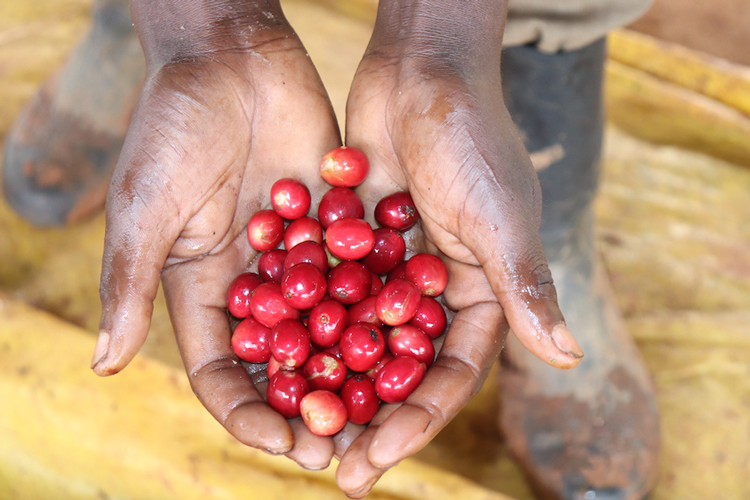
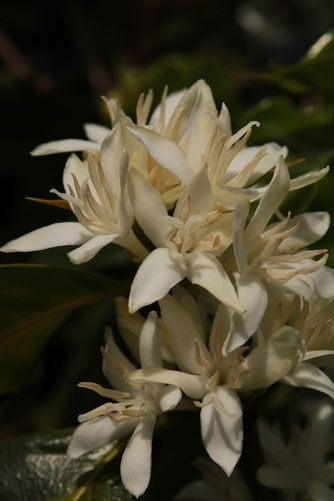
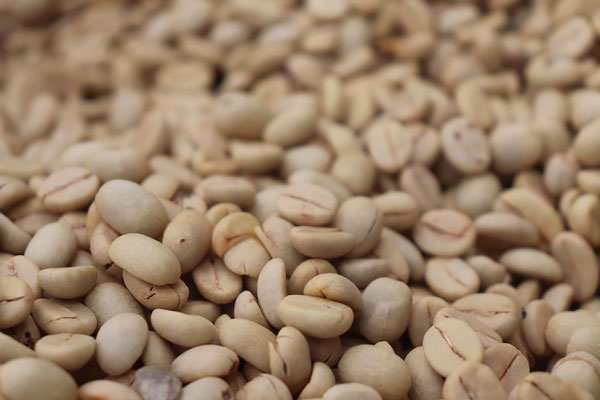
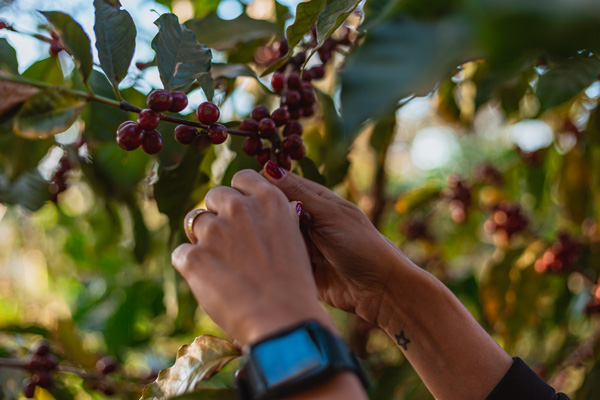

Coffee arrived in Kenya with French Holy Ghost missionaries near Bura in 1893, but commercial production took off in the early 1900s under British settler estates; African smallholders were only permitted to grow coffee from the 1930s–50s onward, and it was this later smallholder expansion – organised through farmer co-operative societies and their communal "factories" (wet mills) – that now forms the backbone of Kenyan production. Kenya uses a distinctive screen-size grading system (E, then AA as the largest commercial grade, down through AB, C, PB for peaberry, and lower grades TT/T), with most quality lots sold through the weekly Nairobi Coffee Exchange auction, alongside a growing direct-trade and second-window system.
The country's high-altitude volcanic soils, dual bimodal rainfall (main crop October–February, fly crop May–August) and heirloom SL varieties combine to produce the intensely juicy, blackcurrant- and citrus-toned acidity that defines the "classic Kenyan cup." Kenya's meticulous washed processing – full pulping, multi-stage fermentation, repeated washing and slow raised-bed drying – is widely regarded as one of the most rigorous in the coffee world and a major contributor to the clarity and brightness for which its coffees are known.
NOTE THESE ARE A STARTING POINT AND INDICATE A RANGE TO WORK WITHIN
| Age Best Used | 10-25 days after roast |
| Brew Parameters | Dose 20g in the portafilter to extract 44g in the cups in 25 seconds at 93.5 degrees C |
| Best Freeze Date | 10-14 days after roast |


