
$79.00
Crops + Cups Board Game


Have an account? Log in to check out faster.

El Ángel, El Salvador, Natural

Red berries, citrus and botanical
A juicy, full-bodied coffee with blackberry and grape at the forefront, balanced by smooth chocolate. Rich sweetness and a rounded body bring the flavours together, with chocolate lingering through the finish.
| TASTES LIKE | Blackberry, grape and chocolate |
| ROAST | Filter |
| COMPONENTS | n/a |
Karibu shows a different side of Thageini. The Nyeri wet mill is operated by the Aguthi Farmer's Co-operative Society and supported by around 450 member producers, who grow SL28 and SL34 on small high-altitude farms surrounding the station.
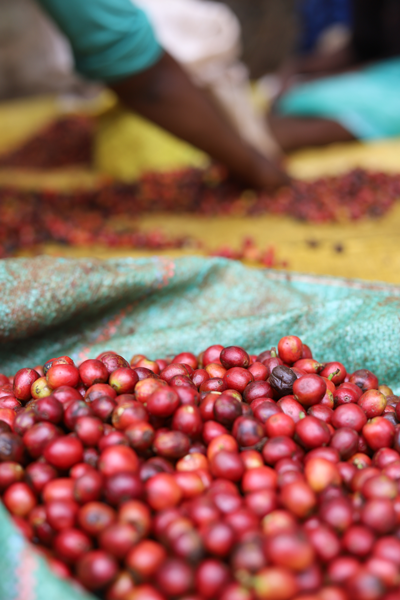
Rather than beginning with Kenya's traditional pulping and washing, this Supernatural lot keeps the fruit intact. Carefully sorted cherries are piled on raised beds and wrapped into cocoons for four days, retaining heat and moisture while aerobic fermentation builds sweetness, fruit intensity and body. The cherries are then spread across the beds and dried slowly for 25 to 30 days. Project Origin introduced experimental equipment and new drying beds at Thageini from 2019, allowing the mill to explore these processing styles alongside its washed coffees. Karibu uses that infrastructure to turn familiar Kenyan varieties into a generous, stone-fruited cup with a distinctly fuller texture.
| PRODUCER | Rafael Gerardo Silva |
| REGION | Apaneca-Illamatepec Mountain Range |
| VARIETAL | SL28 and SL34 |
| PROCESS | Supernatural |
| ALTITUDE | 1650-1800 masl |
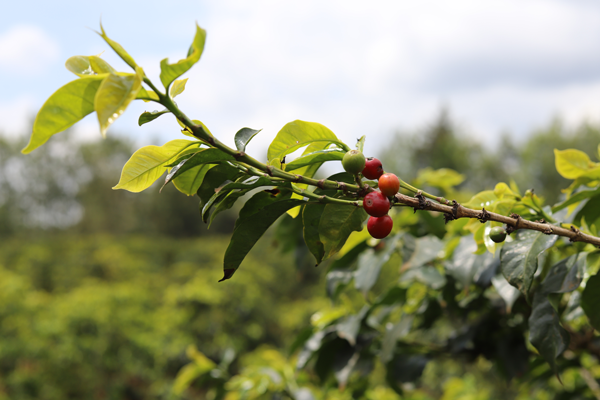
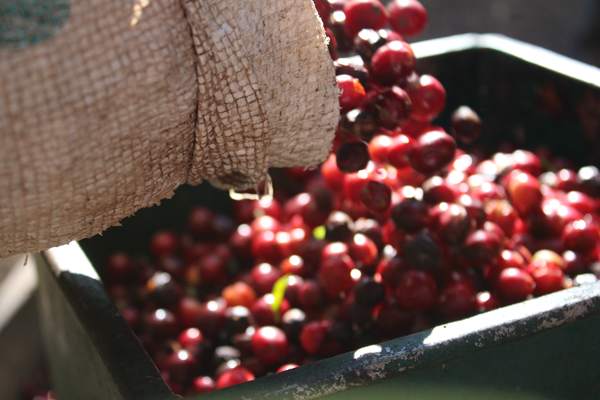
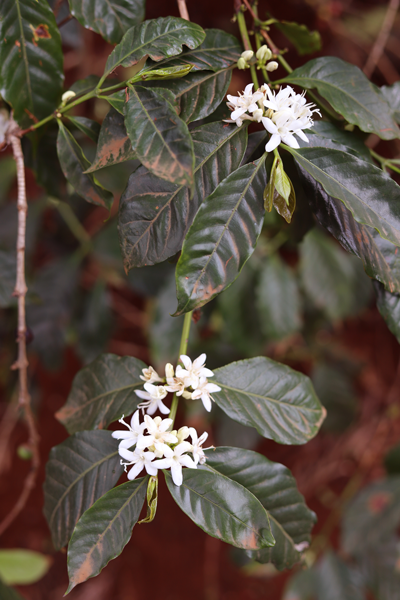

Coffee was introduced to Kenya in 1893 by French missionaries who brought Bourbon seed stock from Réunion Island. The 1933 Coffee Act established the Kenyan Coffee Board and, from 1934, Kenyan green coffee was sold through a transparent, government-run open auction system that rewards quality with price, while reforms in 2023 have since allowed farmers to also sell directly to buyers. Kenya's coffee is grown largely by smallholders organised into co-operative societies, each running one or more wet mills (known locally as factories) where members deliver cherry for processing. The Central region, including Nyeri, Kiambu, Kirinyaga, Murang'a and Thika, produces the bulk of the country's coffee. Nyeri County, set between the southwestern slopes of Mount Kenya and the Aberdare Range, is home to some of the country's oldest and most celebrated producers. Coffee here grows at 1,400-2,000 metres above sea level in deep, well-drained volcanic loam soils under a bimodal rainfall pattern, where cooler nights and diffuse high-altitude sunlight slow cherry ripening and concentrate sugars, producing Kenya's distinctively bright, complex cup profile.


