
$86.90
Crops + Cups Board Game


Have an account? Log in to check out faster.

Regional Aurea, Papua New Guinea, Washed

Red apple, raisin and caramel
Aurea is Project Origin's curated regional profile from the Eastern Highlands, built from small washed lots grown in family coffee gardens around the Unggai District. It opens with sweet caramel, lifted by raisin and a crisp red apple note.
| TASTES LIKE | Red apple, raisin and caramel |
| ROAST | Espresso |
| COMPONENTS | n/a |
Aurea is built from many small coffees, brought together to express one place. Across Papua New Guinea's rugged Eastern Highlands, families tend coffee trees in garden plots surrounding their homes, often growing old Typica, Bourbon and Arusha beneath mixed shade.
This regional lot comes from the Unggai District and nearby communities, where farms sit between 1,800 and 2,200 metres. Cherry is picked by hand, washed and dried before Project Origin and its local partners cup and select the lots that best fit the Aurea profile. Rather than losing the identity of each contribution, the blend gives small producers a pathway into a consistent regional coffee while preserving the chocolate sweetness, soft citrus and clean, tea-like finish associated with the Eastern Highlands. It is a careful exercise in curation: many family harvests, shaped into a dependable expression of origin.
| PRODUCER | Smallholder producers of the Unggai District |
| REGION | Unggai District and surrounds |
| VARIETAL | Typica, Bourbon and Arusha |
| PROCESS | Washed |
| ALTITUDE | 2000 masl |
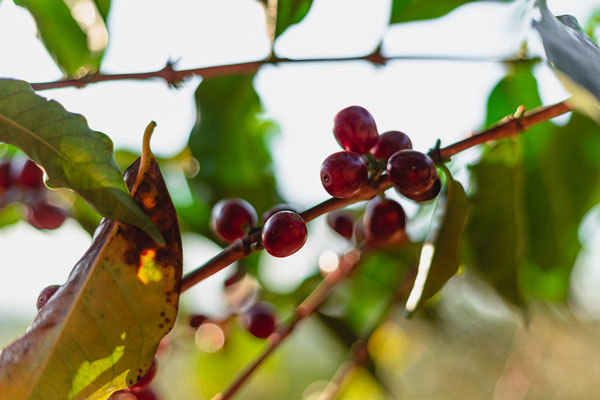
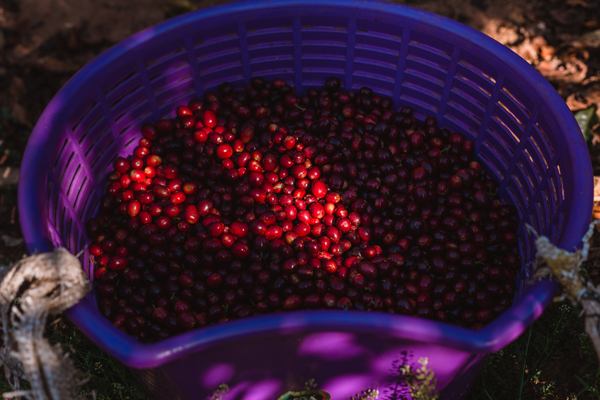
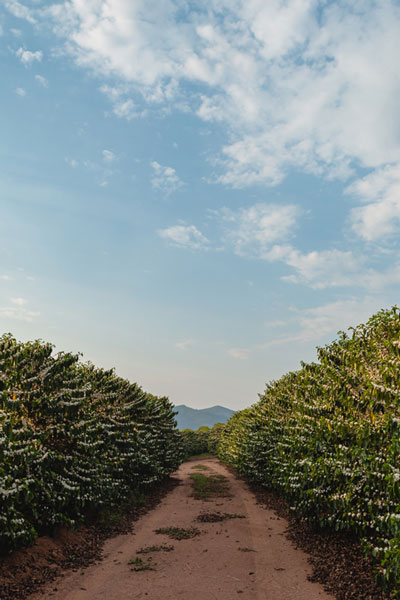
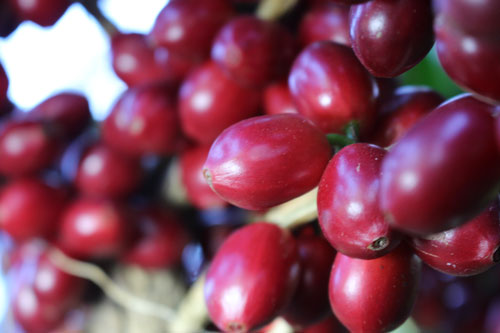

Coffee has been grown commercially in Papua New Guinea since the late 1920s, when plantations were established using seed from Jamaica's Blue Mountain Typica, and the crop spread into the highlands and expanded rapidly through the 1950s, 1960s and 1970s. Although it began as a plantation crop, coffee is now overwhelmingly a smallholder crop, with small farmers producing more than 85% of the national harvest and hundreds of thousands of families relying on it as a cash income.
Around 90% of production comes from the highland provinces, and the Eastern Highlands, centred on the market and milling town of Goroka, is one of the two largest producing provinces along with the Western Highlands. High altitude, an equatorial climate and fertile volcanic soils give excellent specialty potential, although steep terrain and limited roads make transporting cherry and parchment a constant challenge. Most coffee is washed, and much of it is grown under shade in garden plots with little or no chemical input. The Unggai District, just south of Goroka, is typical of this landscape, with smallholders tending old Typica, Bourbon and Arusha trees at elevations close to 2,000 metres.
NOTE THESE ARE A STARTING POINT AND INDICATE A RANGE TO WORK WITHIN
| Age Best Used | 10-25 days after roast |
| Brew Parameters | Dose 20.3g in the portafilter to extract 42g in the cups in 26 seconds at 93.5 degrees C |
| Best Freeze Date | 10-14 days after roast |


